

SS27
-
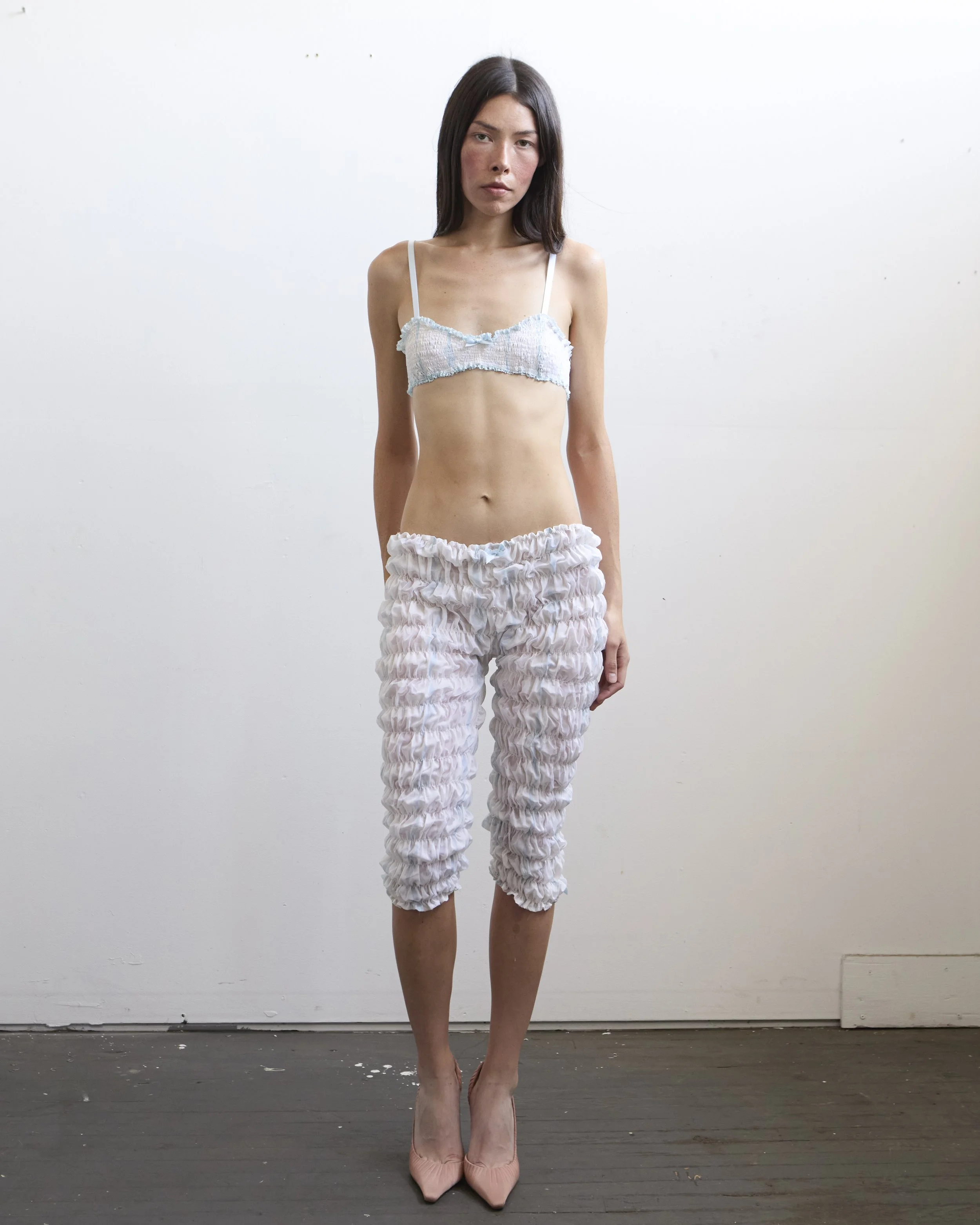
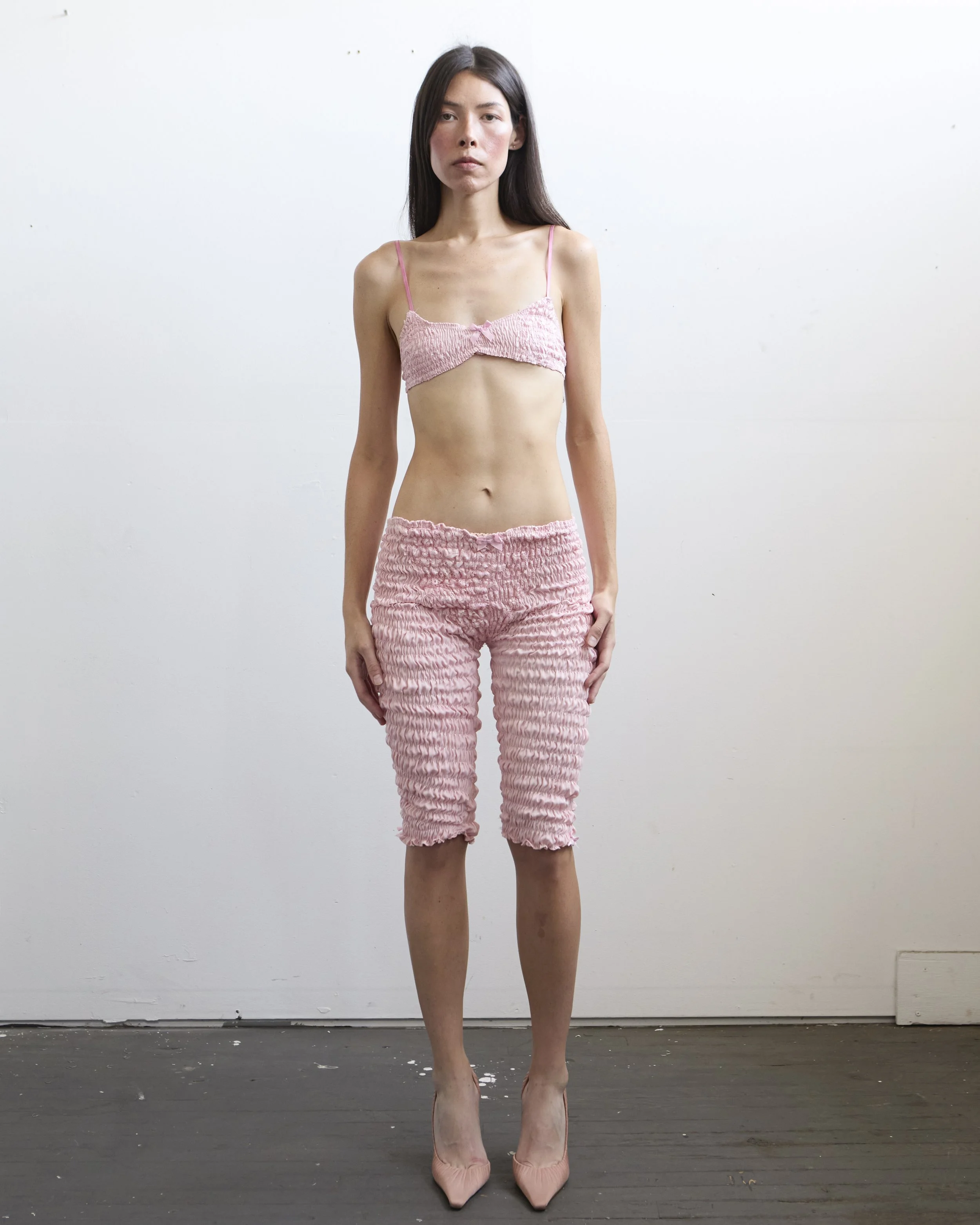
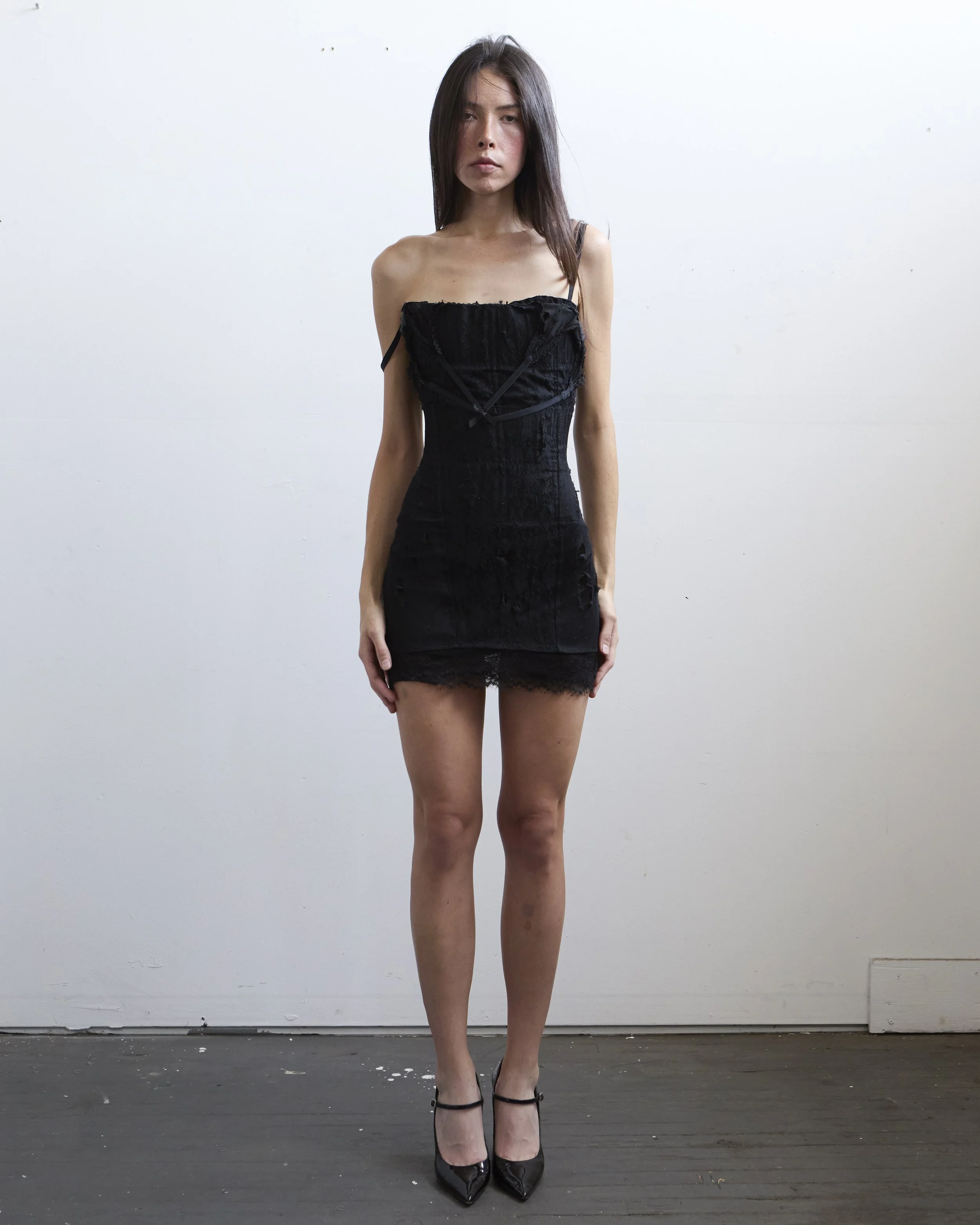
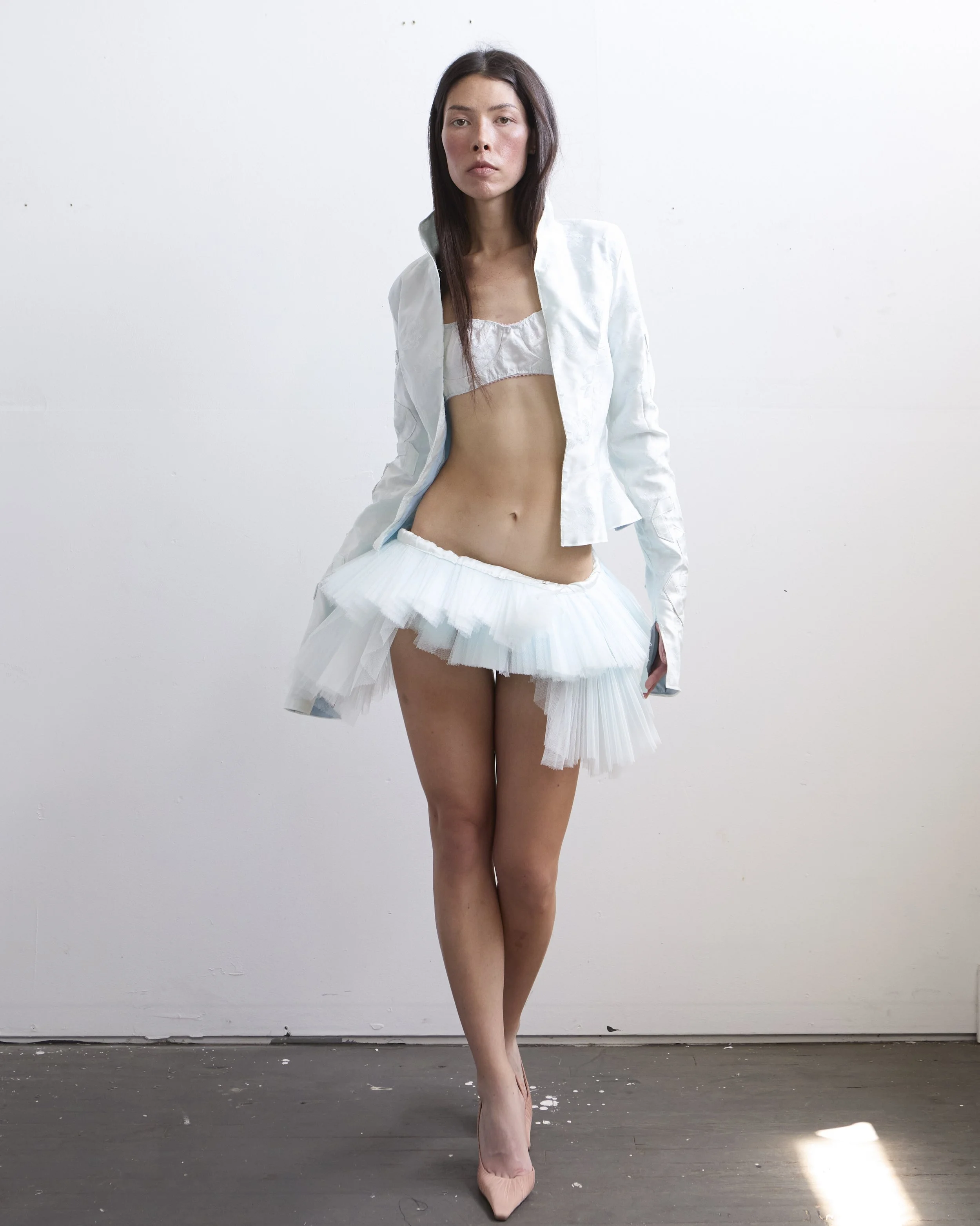
IF YOU WANT ME TO is the first full Erik Charlotte collection. It consists of 18 looks, and is guided by a central desire for owned sensuality through transsexual identity and experience. In contrast to much of my previous work, SS27 ditches absurdist escapism for autobiographic realism, with a focus on vulnerability, sexuality, and restraint.
Conceptually, SS27 began as a fictionalized tale, a three-part epic of sorts that followed a young transsexual woman through a journey of innocence, fetishization, loss, and renegotiation. However, the more the collection began to materialize, it became unavoidable to distance this imaginary woman from my own experience, and the lived experiences of my close friends and [sisters]. The intense and often grotesque projection of men’s sexualized fantasies onto trans women is a harrowing and reductive reality, and a constant reminder of just how easily one can be dehumanized, especially when the veil between desire and disgust is at its thinnest. The average man’s sexual fantasy projected onto us is intensely humiliating, and typically informed by decades of media representation and pornographic othering. Sensuality, in this case, never feels like something owned by the transsexual woman. There is no delicacy, no malleability, and no agency when you’re being fetishized, and sensuality becomes a flat surface in which you are expected to comply with the dominant party’s every desire.
This is where the collection name IF YOU WANT ME TO derives from:
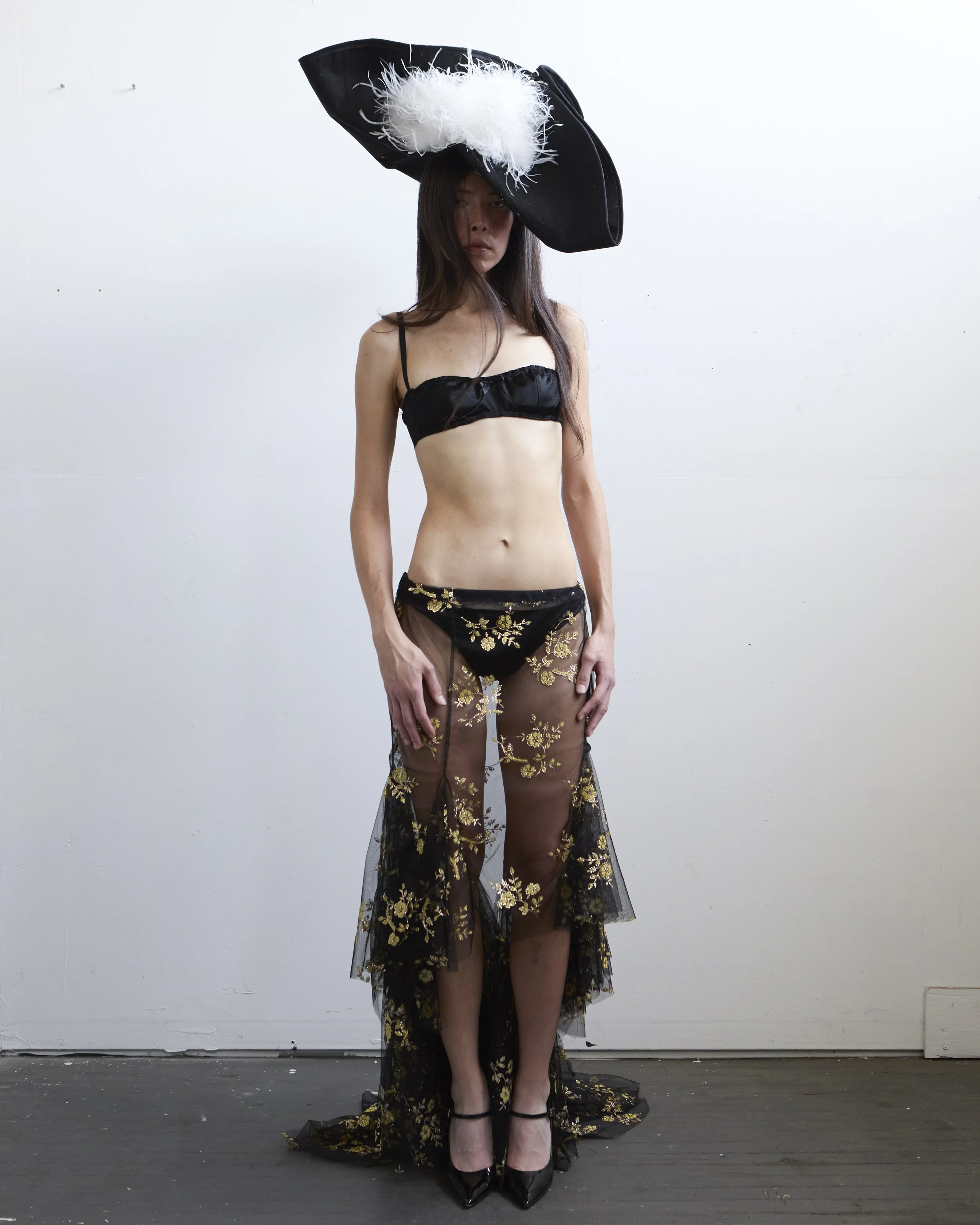
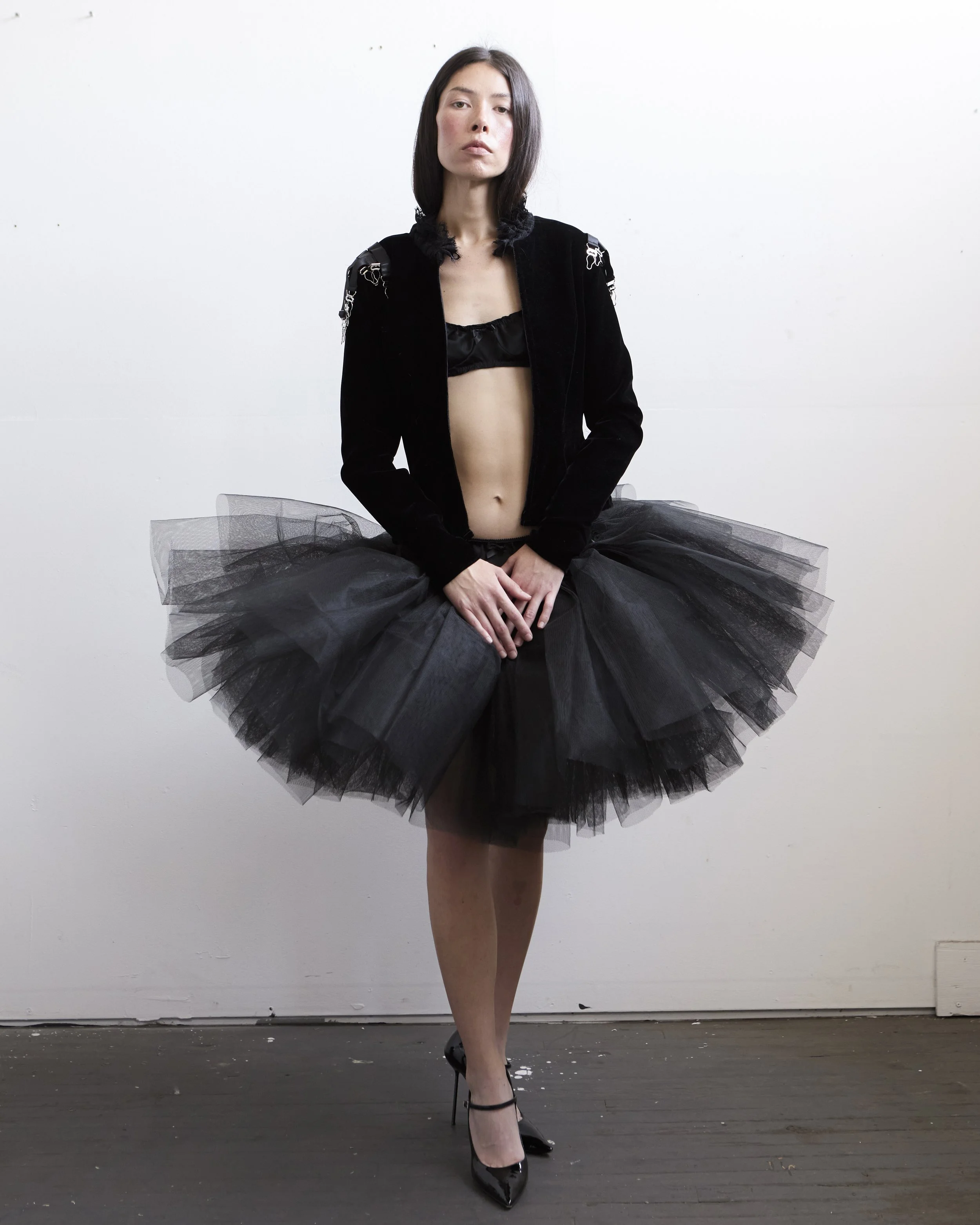
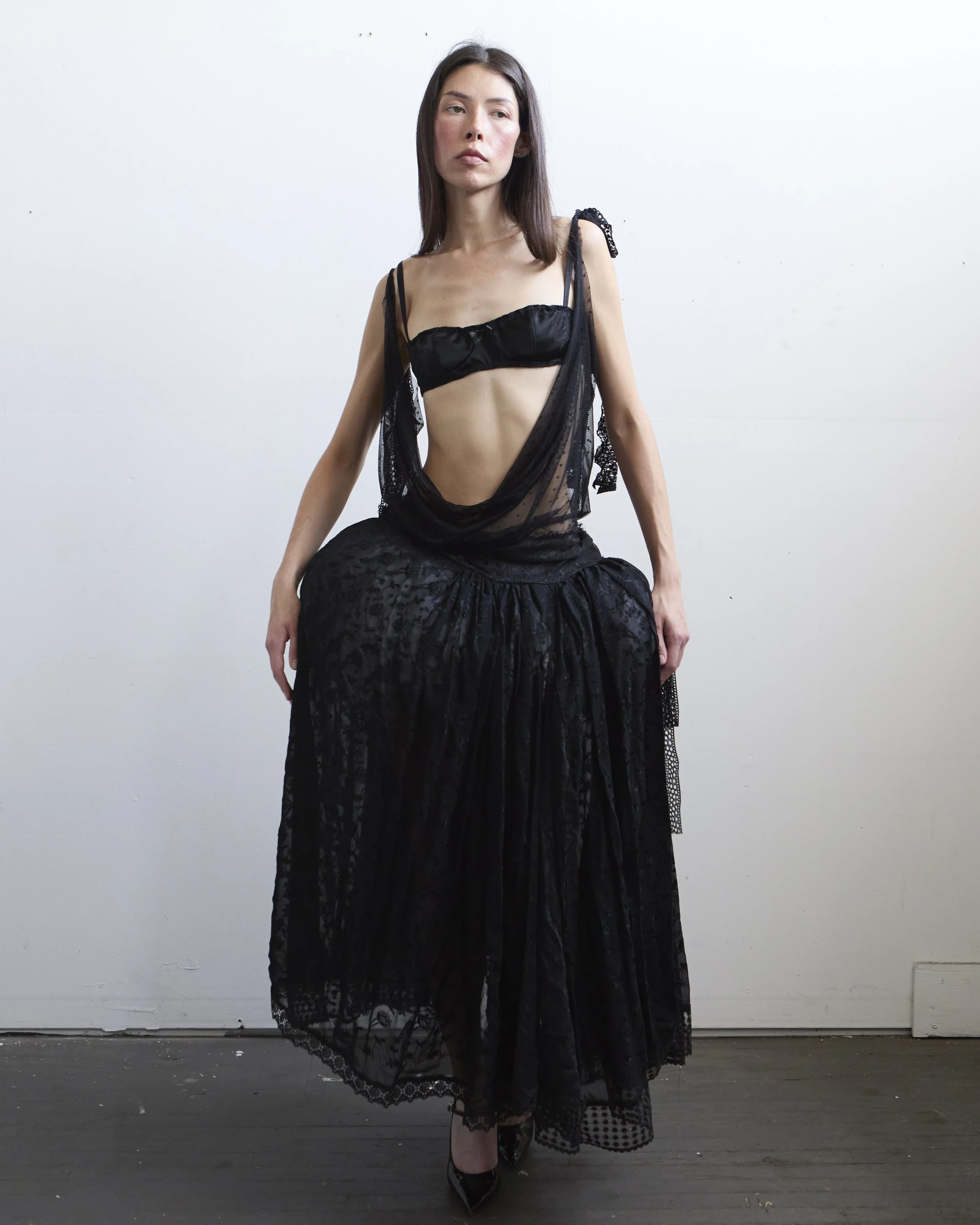
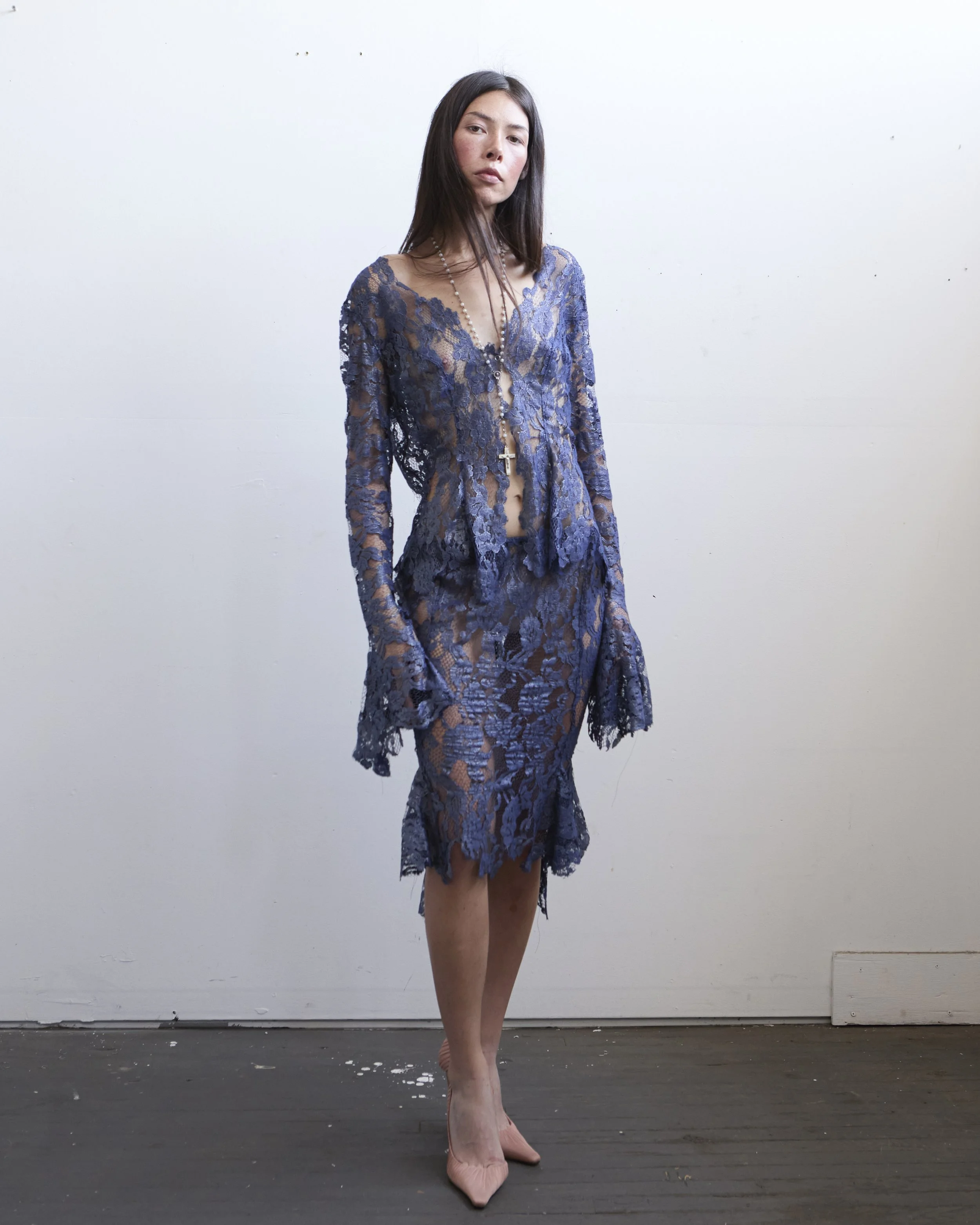
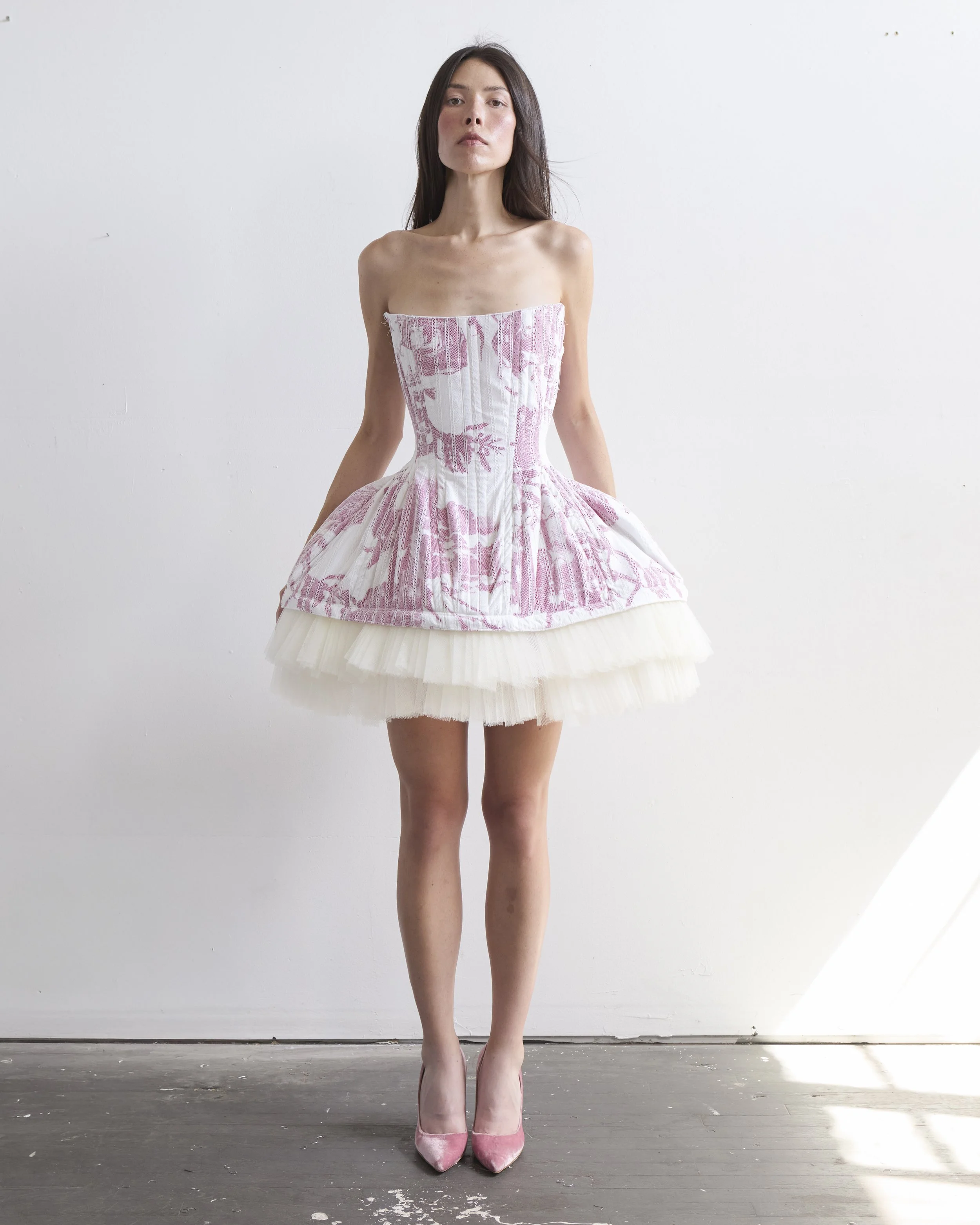
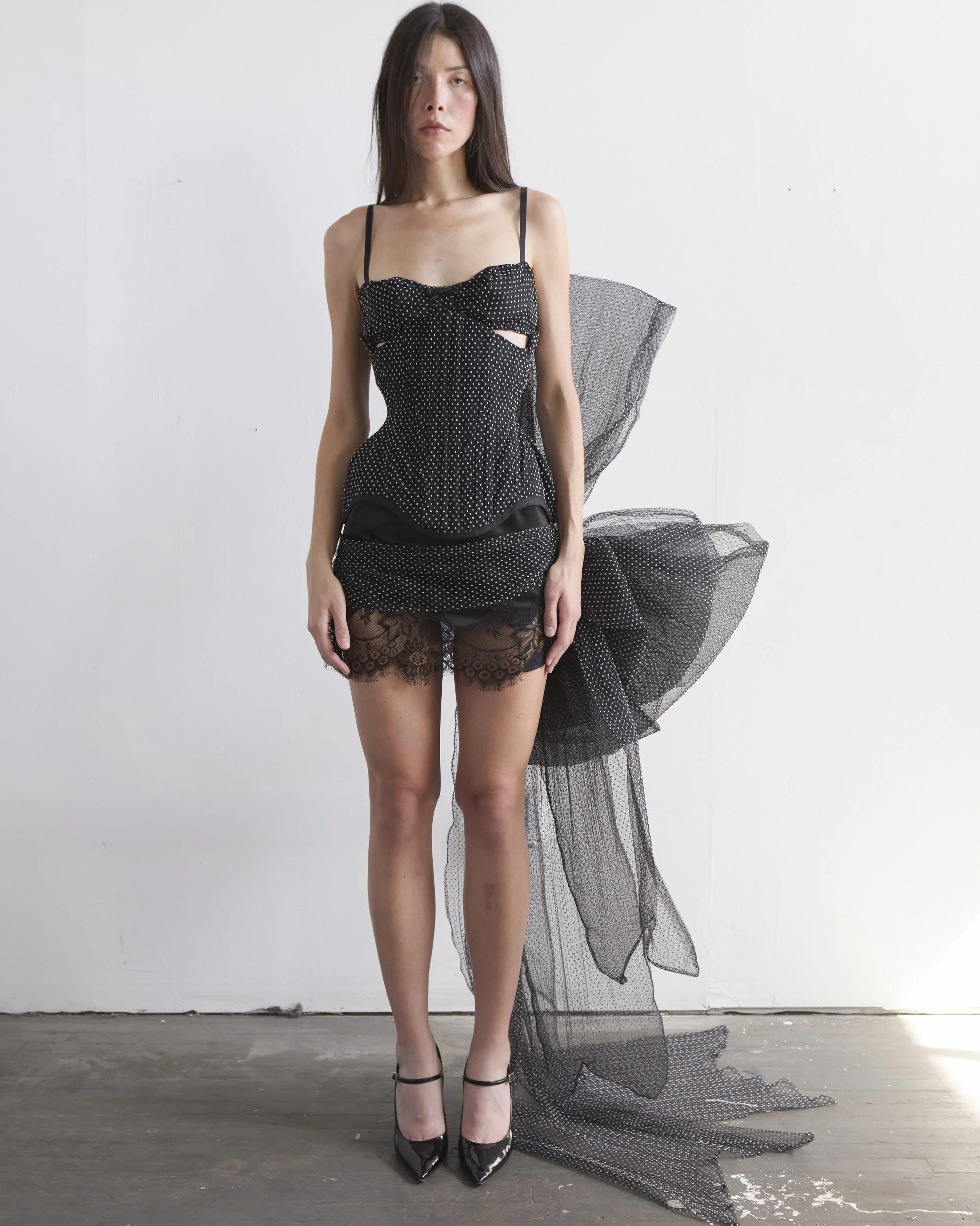
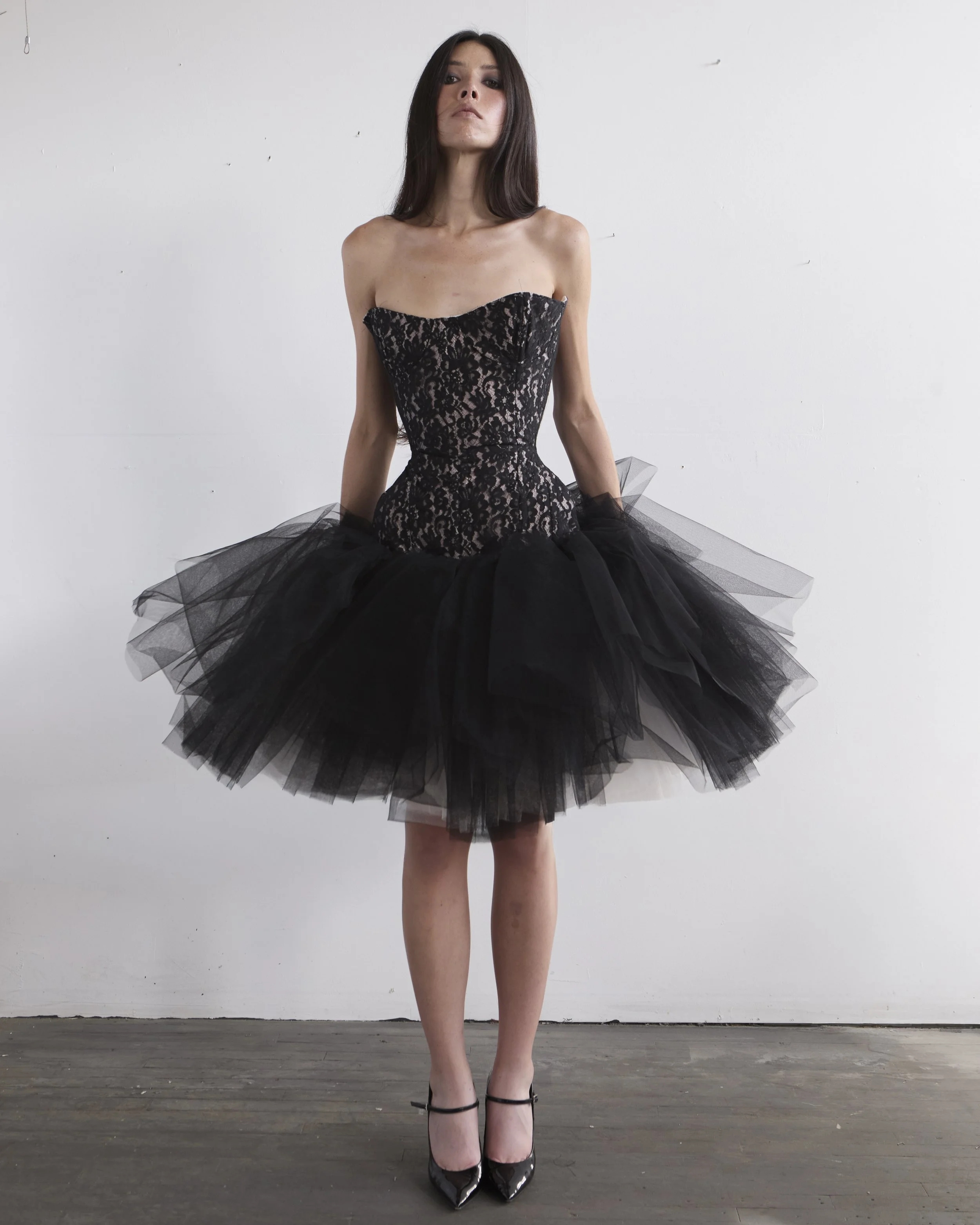
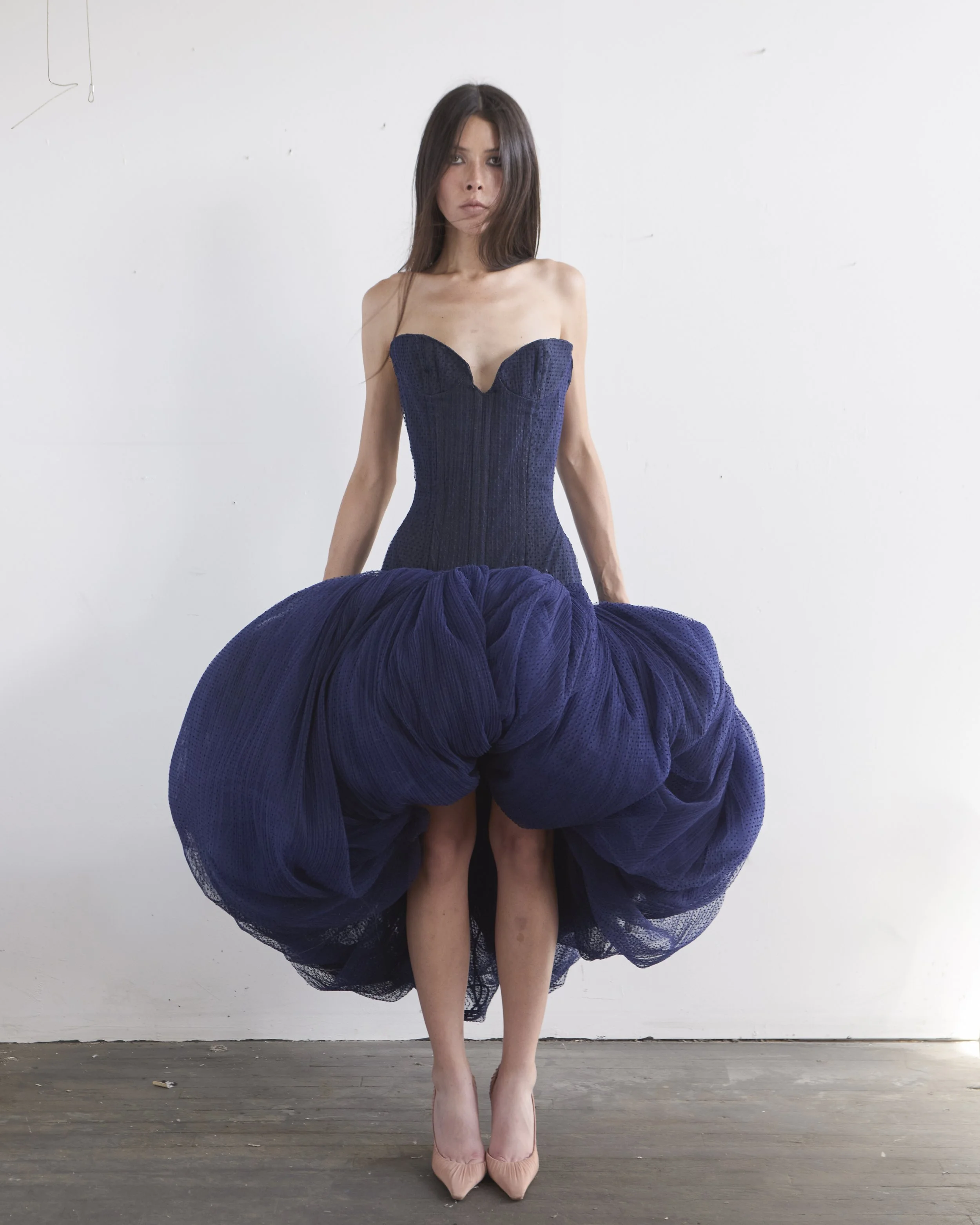
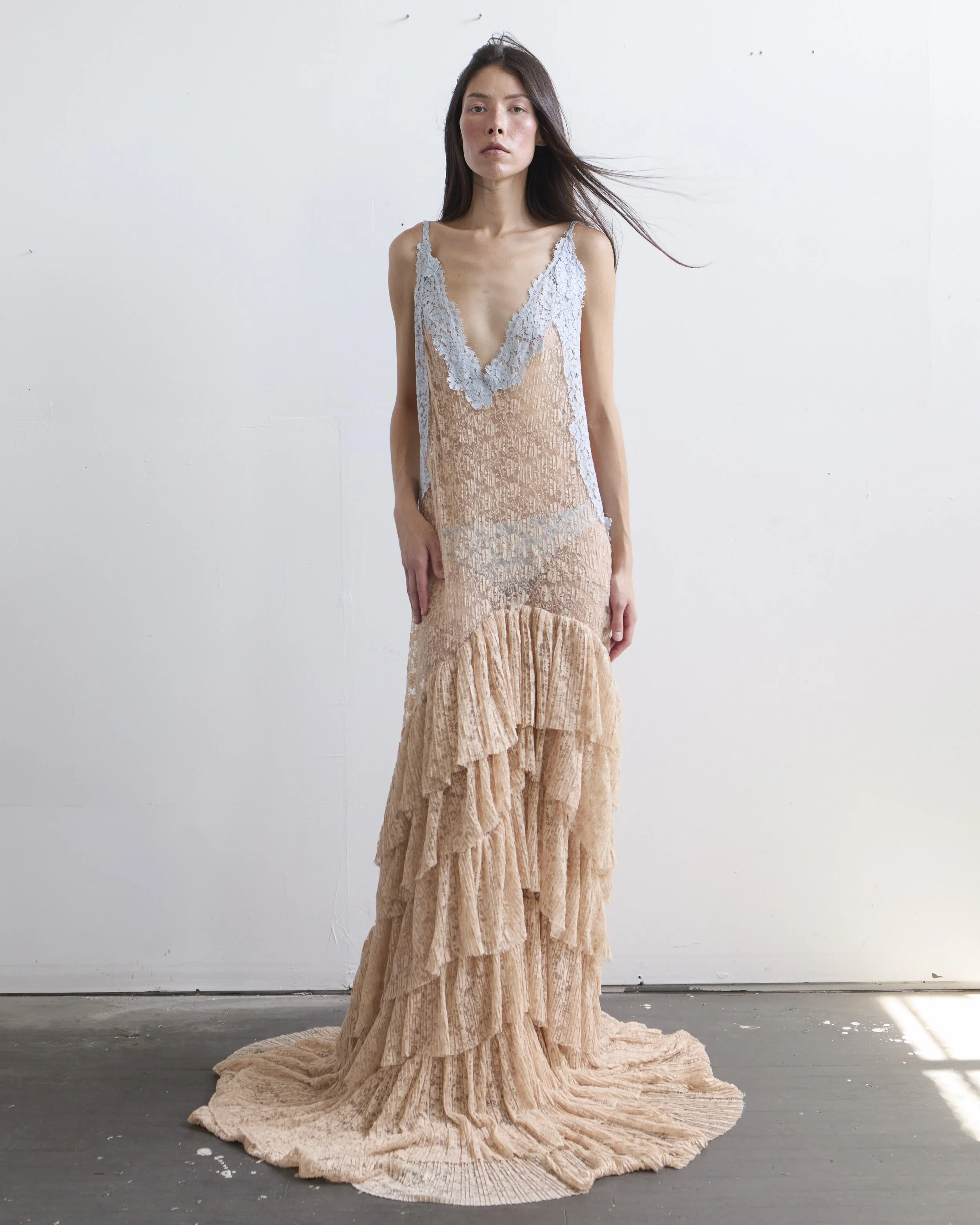
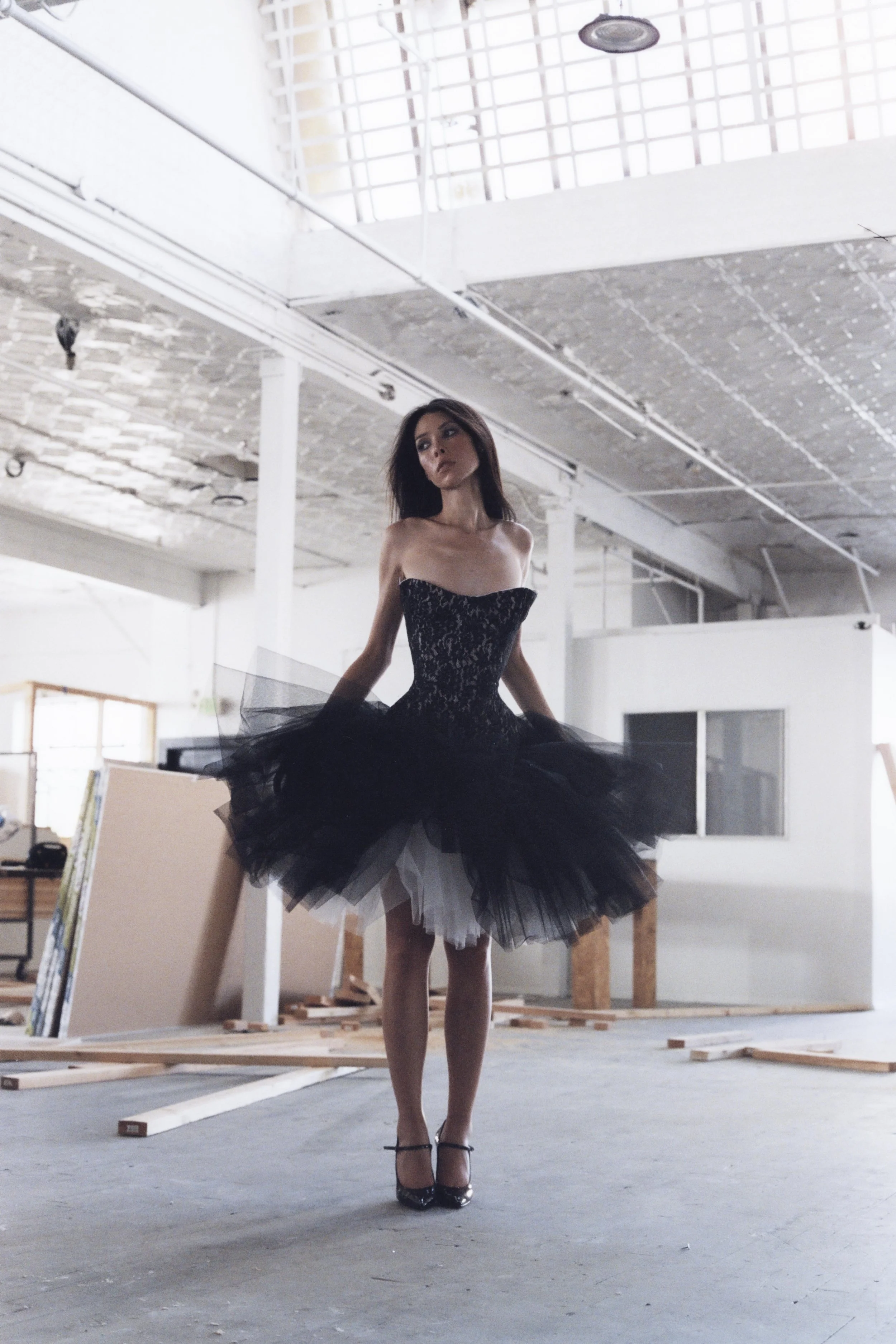
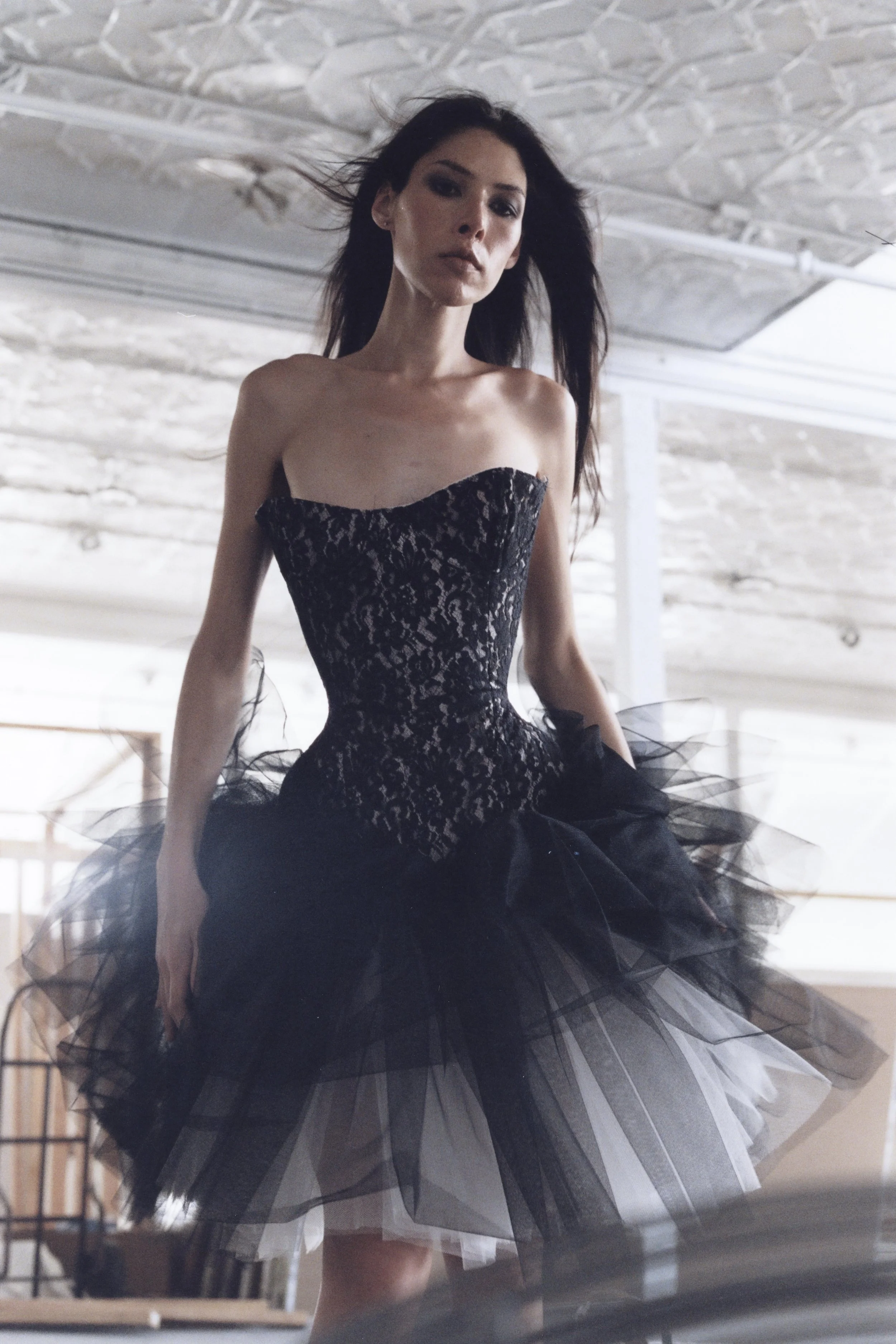
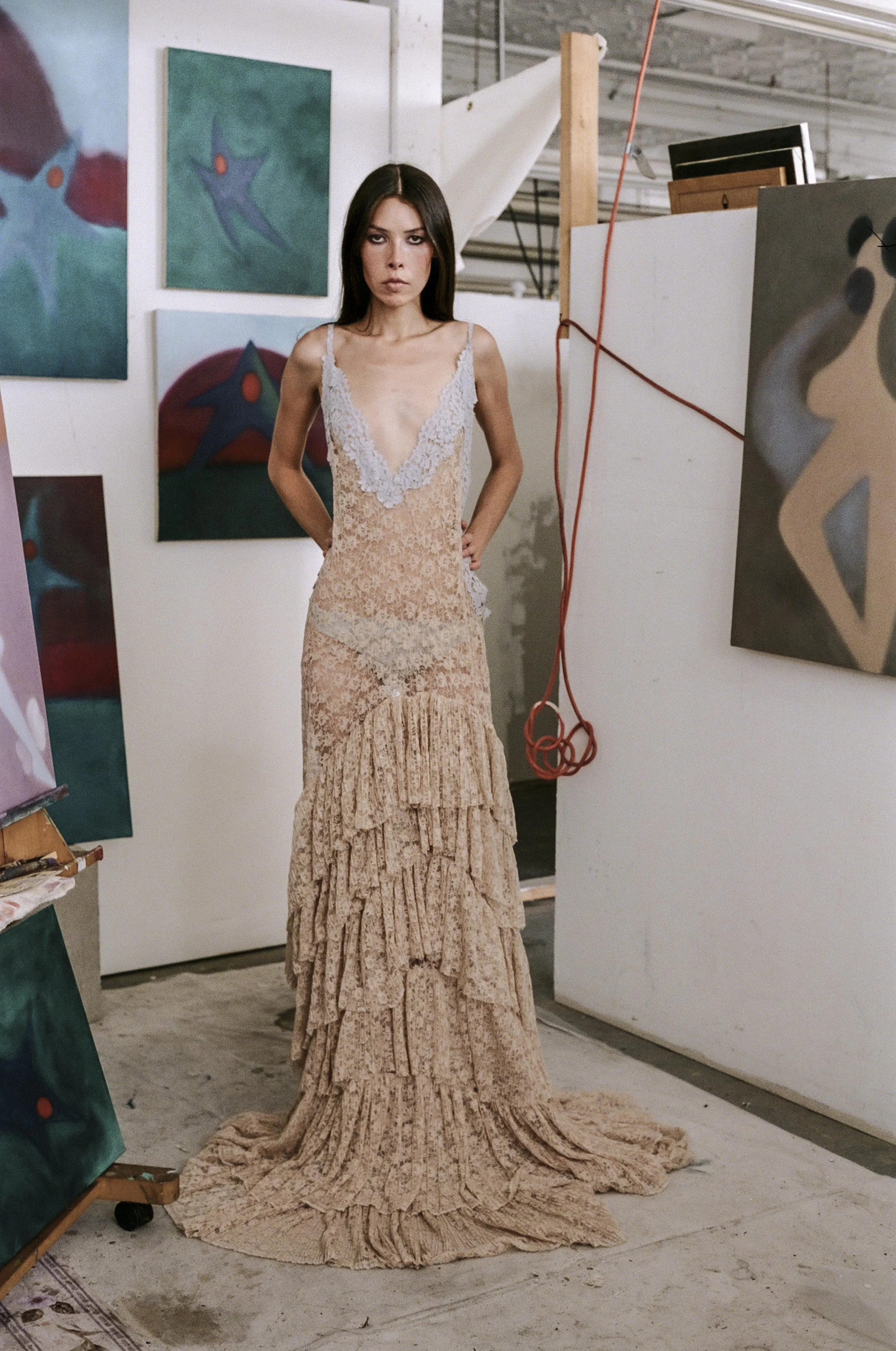
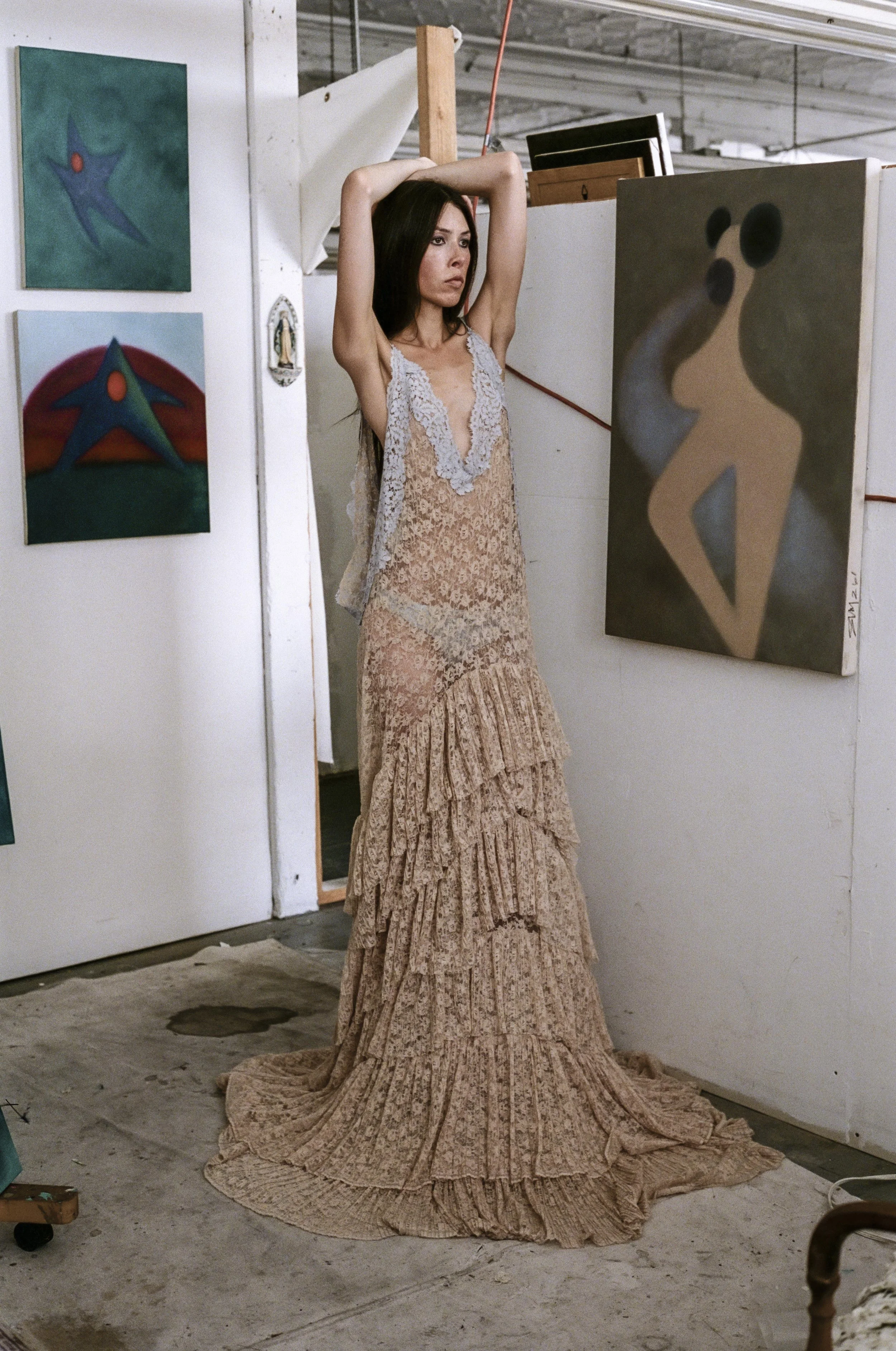
a too-familiar statement that surrenders all agency and personal desire to the other.With this collection, my aim was to create garments where the wearer has complete ownership over her own sensuality, a delicate sexual energy that feels natural and innate to the wearer instead of projected onto her against her will. Visually, the collection is a pared-back story of sex and strength, with a vintage-inspired muted color palette consisting mostly of white, black, beige, baby blue, and soft pink, with touches of saturated pink, navy blue, and subtle white on black polka dot. Despite the step back from grandiosity and showmanship, SS27 still follows several established codes: drop waist corsets, tiered lace ruffles, excessive volume courtesy of dyed crinoline, and an abundance of assorted pieces of lingerie.
In this collection, lingerie is designed to be seen. It distances itself from the stretchy lace bras and itchy polyester thongs that make up the idealized transsexual fantasy: garments made to be scandalously revealed and allow the man a slack-jawed, exaggerated reaction to the anatomy concealed in the cheap scratchy triangles of fabric. Instead, the lingerie in this collection is adapted from vintage patterns and sits more comfortably on the body, embodying a more innate and effortless sensuality, thoughtfully framed and accented by their corresponding garments and accessories.
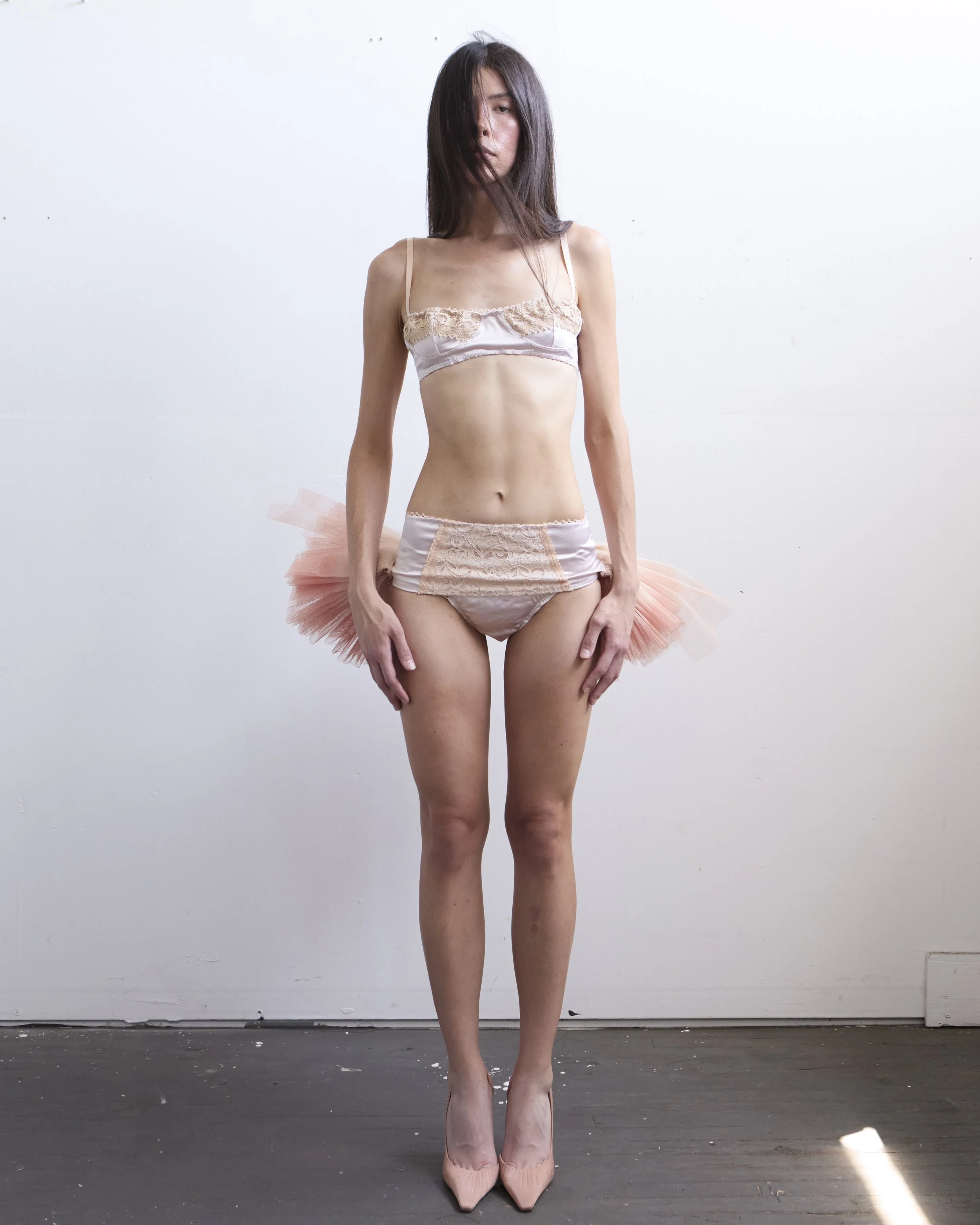
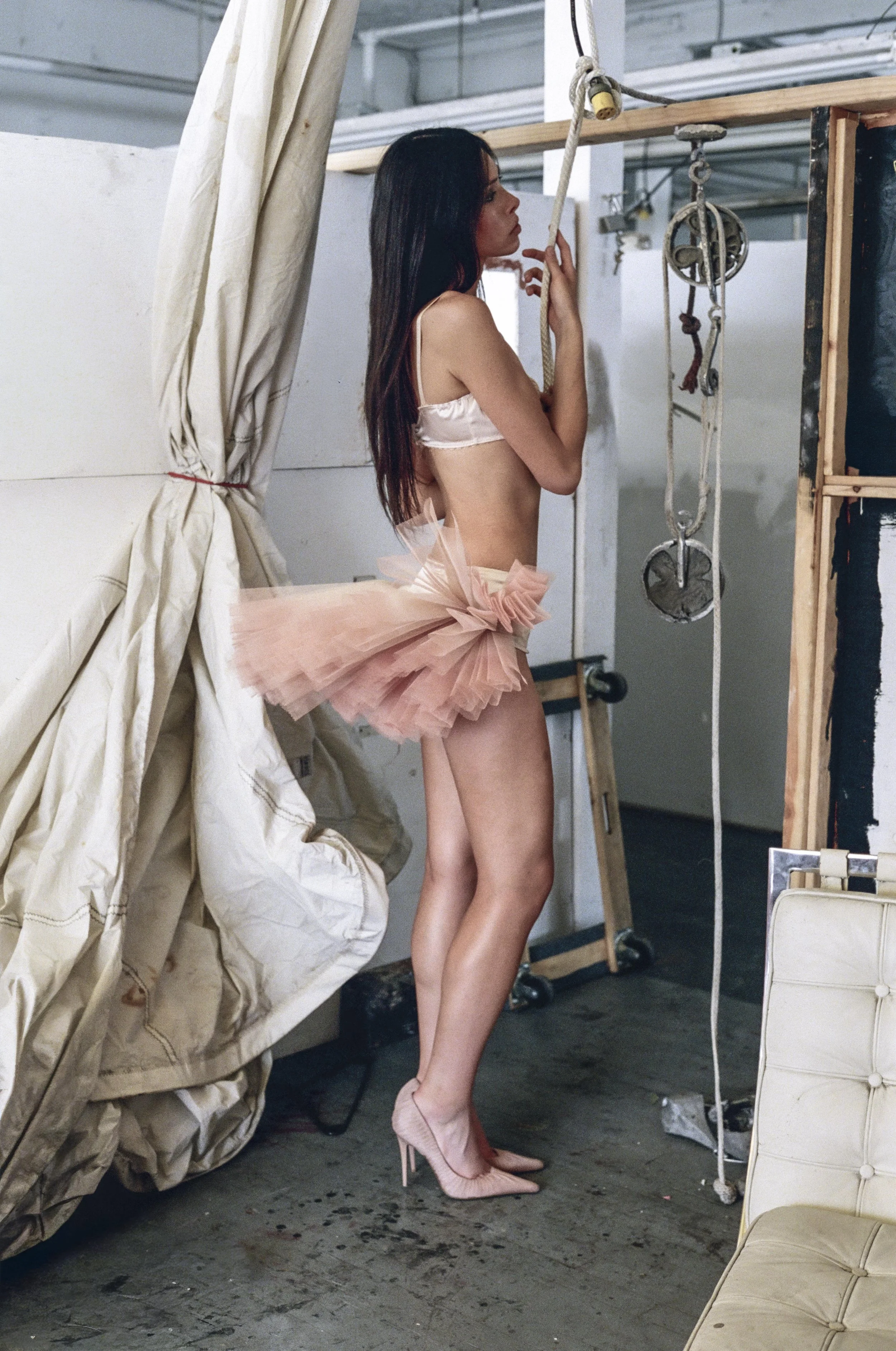
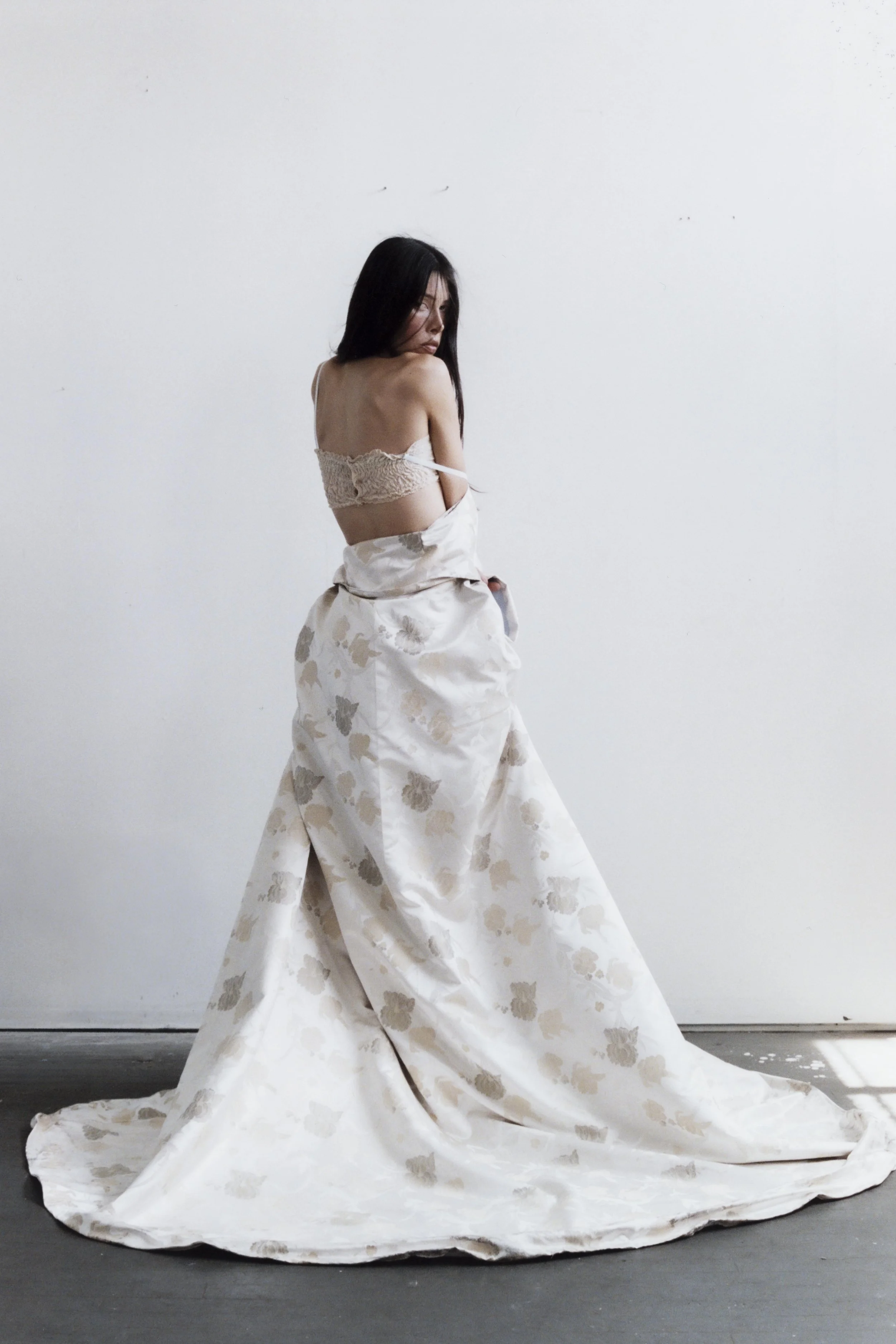
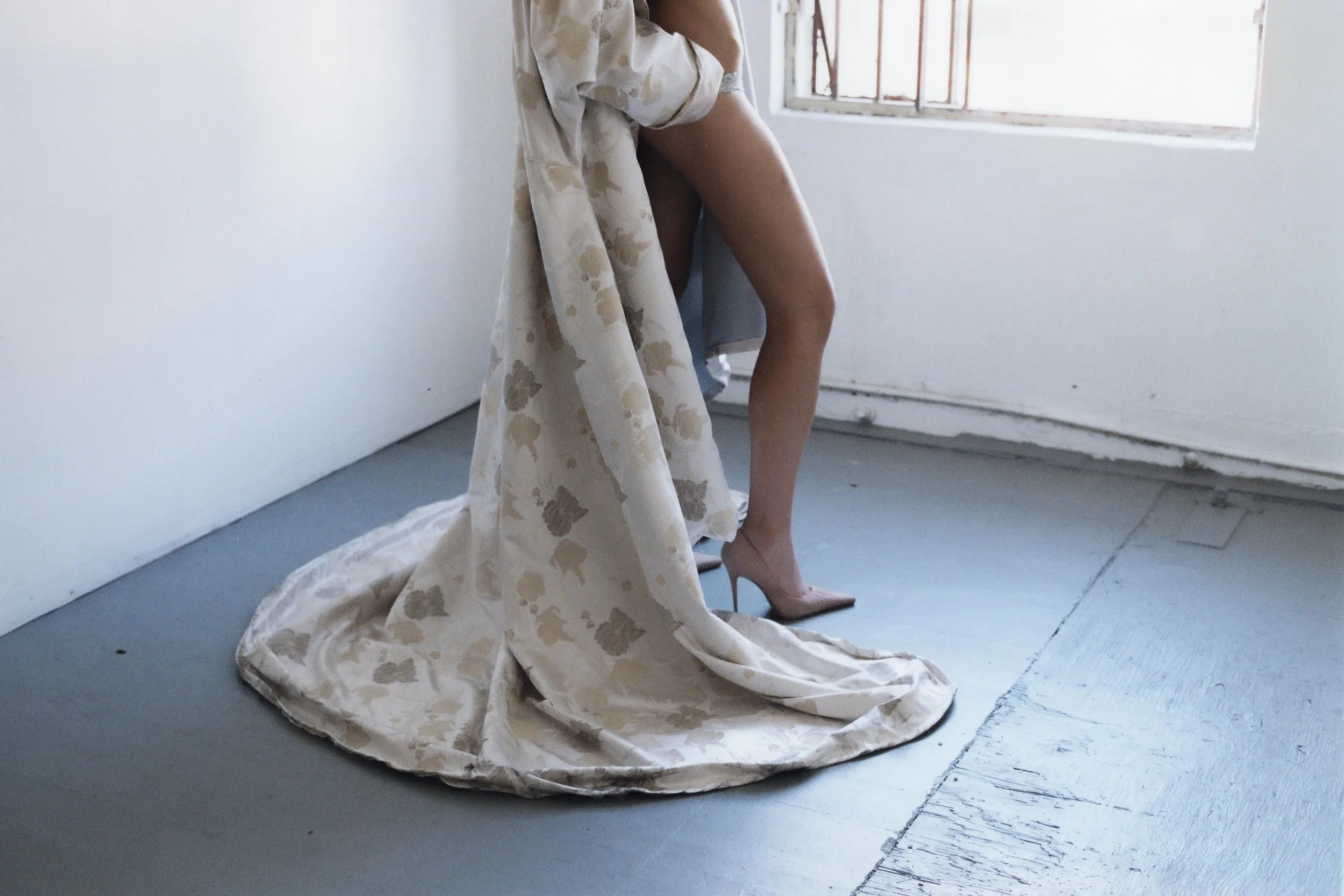
Even with this focus on delicacy and sensuality, this story of fetishization and projection is still present in the garments, especially exemplified in Look 3. This dyed satin bra, panty, and bustle miniskirt draw from traditional transsexual utility garments, like tucking gaffs and tape, as well as common fetishistic garments men often request or imagine transsexual women to adorn, like shiny pink thongs or easily tearable panty hose. Many looks in the collection feature gathered crinoline bustles and flared tutus, inspired by the delicate femininity portrayed by the subjects of Degas’ various painting and sculpture works. The focus on plunging V-necklines, drop waist silhouettes, and faded colors is in reference to the stylistic cuts of the 20s and 30s, when the ideal of feminine beauty was a lithe and nearly curveless boyish figure.
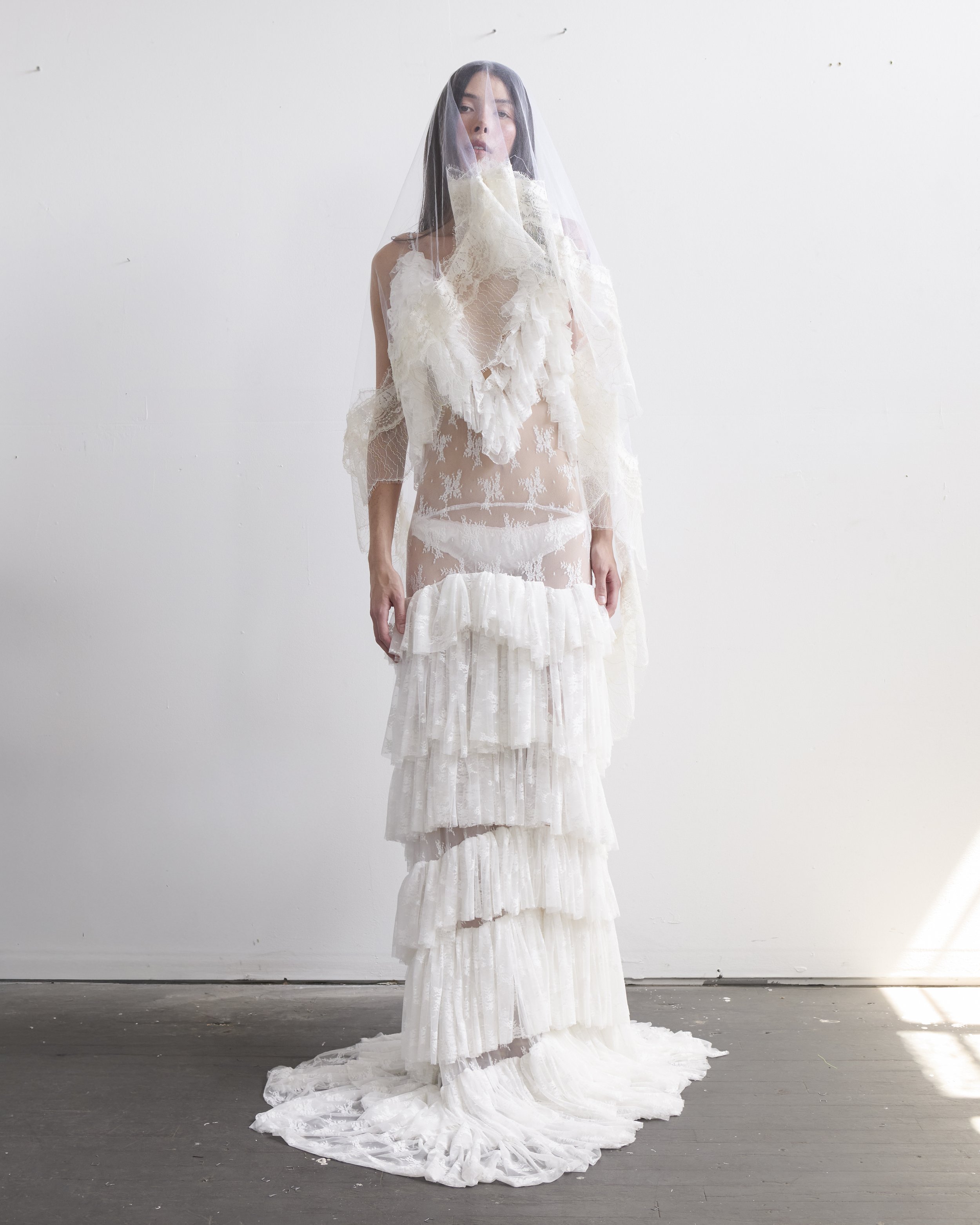
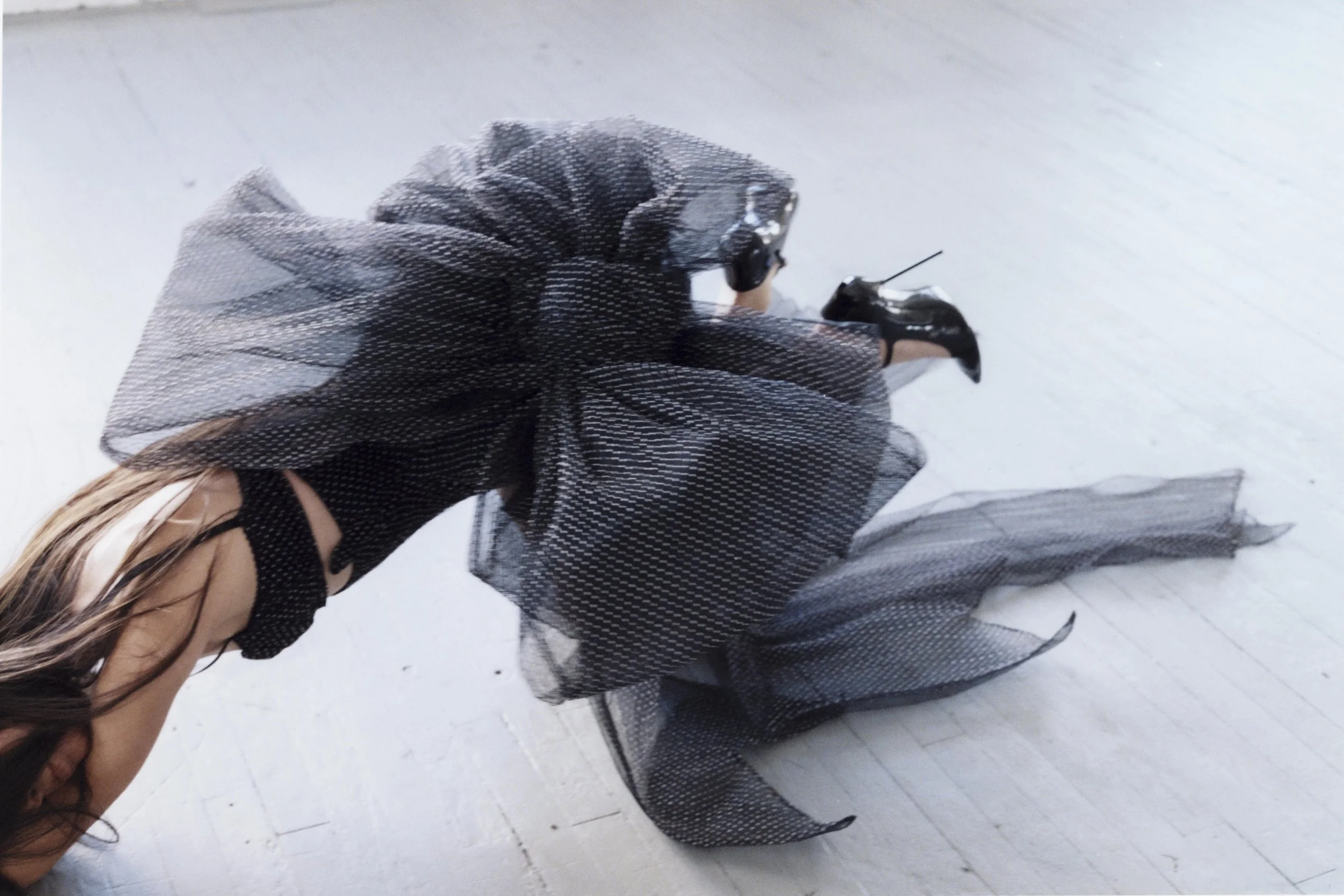
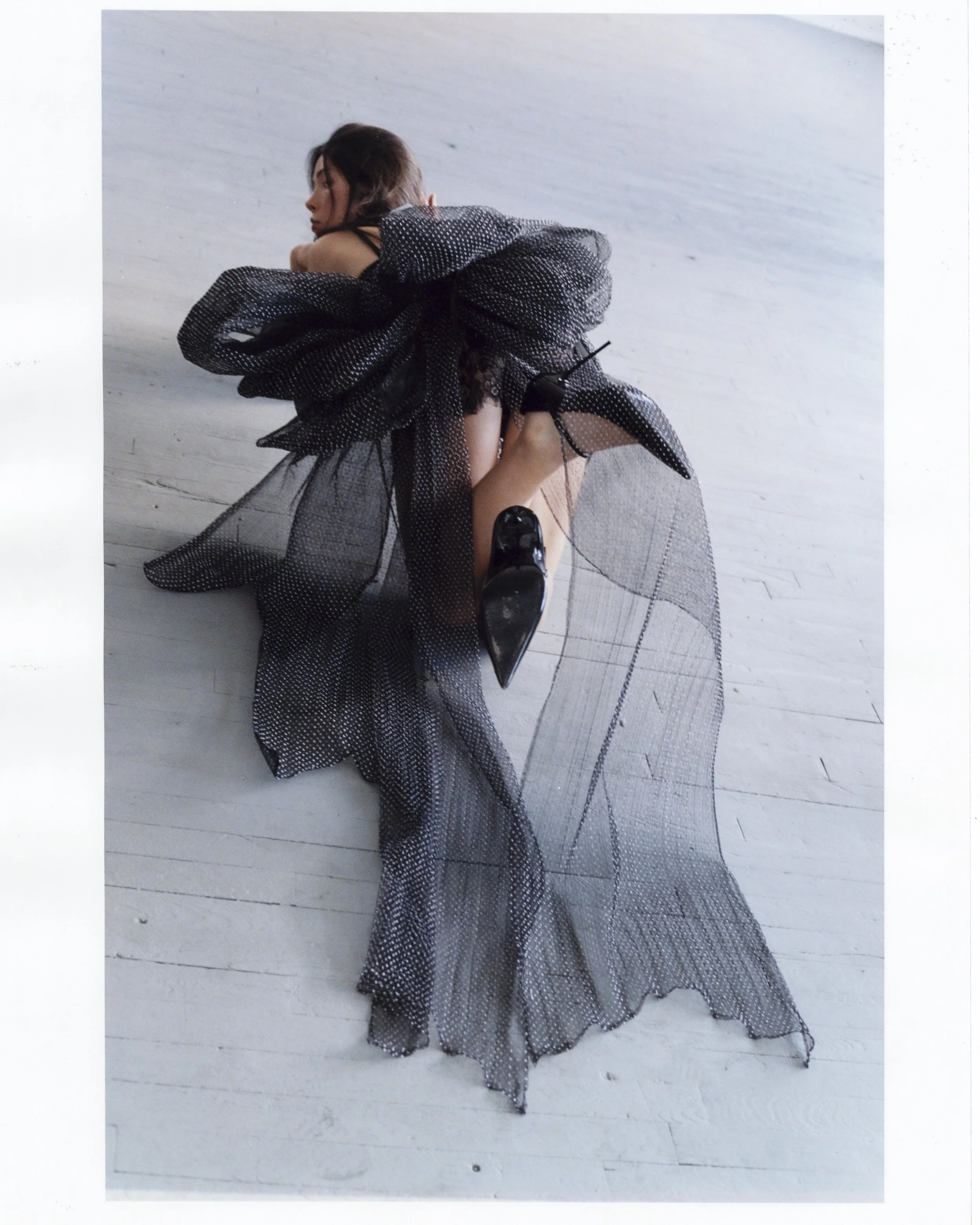
The collection also features custom prints by artist Greta Langenberg, featuring the Dutch folk story of the Mermaid of Edam. In the tale, a beautiful mermaid is captured, stripped of her oceanic algae, and forced to live a life on land spinning wool until her eventual death. She is always longing for the sea, but lives out the rest of her life trapped in an identity projected onto her that never once belonged to her. This print was used in Looks 11 and 12, a set of sister garments with an exaggerated hip silhouette creating a sort of armor around the wearer, a physical embodiment of a cautionary tale. The collection closes with Look 18, a plunging tiered lace wedding gown with a surprising amount of weight. It easily falls off the shoulders and glides down the body, pooling on the floor when the wearer decides it’s time to slip it off in an act of devotion and earnest romance, not of curious fetish or cruel experimentation.
SS27 is the largest and most personal and cathartic project I’ve ever taken on, using my identity and experience as a transsexual woman in an increasingly vicious and disgusted society to tell a restrained story of delicate sensuality and owned power.
Thank you to all the incredible collaborators and friends that made this collection and lookbook possible.

























-
Director/Stylist: Erik Charlotte (@erikch4r)
Photographer: Sophia Liv Maguire (@sophialivmaguire)
Model: Josephine Nguyen (@josie_duhh_)
Makeup Artist: Gabrielle Alvarez (@thegabriellealvarez)
Producer: Mathilde Schneider (@totallymathilde)
Stylist Assistant: Toni Guzzo (@tinyangelette)
Special thank you to Princess Castle (@princesscastle_la)
SS27 campaign shot amongst works by Los Angeles artists Marley White (@marley__white) and Samala Meza (@samalameza)
Custom printed twill by Los Angeles artist Greta Langenberg (@gretugh)
-
Benjamin, H. (1967), THE TRANSSEXUAL PHENOMENON*. Transactions of the New York Academy of Sciences, 29: 428-430. https://doi.org/10.1111/j.2164-0947.1967.tb02273.x
Breu, C. (2025). Sex as Extimacy. In In Defense of Sex: Nonbinary Embodiment and Desire (1st ed., pp. 67–100). Fordham University Press. https://doi.org/10.2307/jj.20522998.6
Downing, L. (2017). PERVERSION: Perversion and the Problem of Fluidity and Fixity. In N. Giffney & E. Watson (Eds.), Clinical Encounters in Sexuality: Psychoanalytic Practice and Queer Theory (pp. 123–144). Punctum Books. http://www.jstor.org/stable/j.ctv19cwdnt.8
de Lauretis, T. (1999). Popular Culture, Public and Private Fantasies: Femininity and Fetishism in David Cronenberg’s “M. Butterfly.” Signs, 24(2), 303–334. http://www.jstor.org/stable/3175644
Matto, M.S. (1972), THE TRANSSEXUAL IN SOCIETY. Criminology, 10: 85-109. https://doi.org/10.1111/j.1745-9125.1972.tb00546.x
Reay, B. (2016). Transgender Orgasms. Feminist Formations, 28(2), 152–161. http://www.jstor.org/stable/44508134
Waidzunas, T., & Epstein, S. (2015). “For men arousal is orientation”: Bodily truthing, technosexual scripts, and the materialization of sexualities through the phallometric test. Social Studies of Science, 45(2), 187–213. http://www.jstor.org/stable/43829021
Westbrook, L., & Schilt, K. (2014). DOING GENDER, DETERMINING GENDER: Transgender People, Gender Panics, and the Maintenance of the Sex/Gender/Sexuality System. Gender and Society, 28(1), 32–57. http://www.jstor.org/stable/43669855